lifehackersworld.com / Articles / Analysis
The AI Productivity Paradox: More Output, More Anxiety
Efficiency gains from AI often expand workload rather than free time, creating a cycle of increased output and heightened existential anxiety.
The Promise of Saved Time
You likely adopted artificial intelligence to reclaim hours lost to repetitive tasks. The expectation was simple: automate the mundane to focus on strategy. Tools like large language models draft emails, summarize documents, and generate code in seconds. This speed creates an immediate sense of relief and capability.
Yet the relief is fleeting. The inbox empties faster, but the queue refills instantly. You complete a report in half the time, only to receive two new requests before lunch. The technology delivers on its promise of speed, but it fails to deliver the promised freedom. The boundary between work and rest begins to blur as the capacity to produce expands without limit.
This dynamic mirrors observations from Oliver Burkeman in Four Thousand Weeks. He notes that productivity techniques often make us feel busier and more anxious, not less. The system rewards volume, not completion. When you clear a task list quickly, the metric of success shifts from finishing to maintaining a constant flow of activity. The empty inbox becomes a signal to start again, not to stop.
The psychological impact is immediate. You feel competent but exhausted. The tools work perfectly, which means the pressure to use them constantly increases. Your value in the workplace becomes tied to the speed of your output. If you slow down, you risk falling behind peers who leverage these tools fully. The promise of saved time transforms into a demand for infinite throughput.
Jevons Paradox Applied to AI
William Stanley Jevons identified this pattern in 1865 regarding steam engines and coal. He observed that as engines became more efficient, total coal consumption rose rather than fell. Efficiency made new uses for energy economically viable, expanding the total demand. The same mechanism now applies to human cognitive labor and artificial intelligence.
When AI reduces the cost of a task, you do not stop working. You perform more tasks. An analysis that once took a day now takes an hour. Instead of taking the remaining seven hours off, you generate three more versions of that analysis. The saved time is not converted into leisure; it is converted into expanded scope. The efficiency gain fuels the expansion of work.
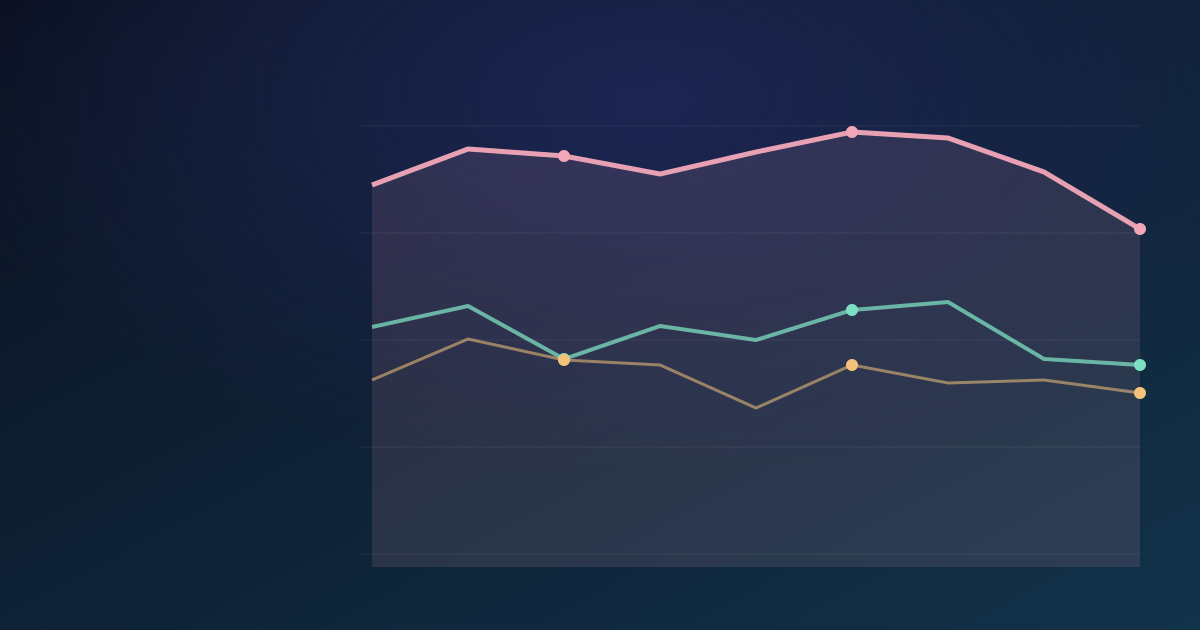
Longitudinal data from the National Bureau of Economic Research confirms this shift. Intensive AI users report working 3.15 hours more per day than non-users. Simultaneously, they report 3.20 hours less free time. The technology does not reduce the burden; it redistributes the capacity to absorb more work. The Jevons paradox is no longer theoretical; it is a measurable reality in the modern workplace.
This expansion happens invisibly. No single decision dictates a longer workday. Each micro-saving of ten minutes leads to a micro-addition of a new task. The accumulation is gradual and unnoticed until the exhaustion sets in. The machine does not force you to work; it simply makes additional work possible and tempting. The barrier to entry for new tasks drops to zero.
- Efficiency gains lead to increased total work volume, not reduced hours.
- Saved time is reinvested into new tasks rather than recovery.
- The threshold for starting work lowers, increasing overall cognitive load.
Rising Expectations and Job Security
Higher output creates a new baseline for performance. When you produce twice as much, the expectation shifts to producing four times as much. Colleagues and managers adjust their benchmarks to match the new speed. The standard for 'normal' work rises rapidly. What was once exceptional output becomes the minimum requirement for employment.
This shift generates deep anxiety about job security. An Anthropic survey of 81,000 users found that those with the highest productivity gains reported the greatest fear of job loss. The logic is structural: if one person can do the work of two, the organization needs fewer people. High performers see themselves as the first candidates for replacement, not the most secure assets.
Legal precedents are beginning to address this tension. Courts in China have ruled that employers must retrain or relocate workers before replacing them with AI. These rulings acknowledge the displacement risk but do not eliminate the underlying economic pressure. The anxiety persists even where legal protections exist. The fear is not just about immediate firing but about the long-term irrelevance of specific skills.
The identity crisis is real. Professionals who built careers on execution now face a market that values decision-making over doing. The transition is difficult. You know the tools work, but you fear the system will eventually optimize you out. The very efficiency that proves your value also signals your potential obsolescence. This cognitive dissonance drives the stress levels observed across sectors.
Anxiety as a Signal
Your anxiety is not a malfunction; it is a rational response to structural change. It signals that the current equilibrium is unsustainable. The feeling of being tangential to the primary process, as described by Henry Kissinger, arises when algorithms make decisions that affect your livelihood without explanation. You feel the weight of the system even if you cannot see its gears.
Ali Abdaal argues in Feel-Good Productivity that sustainable success requires well-being, not just output. When you prioritize speed over feeling, you compromise the very creativity needed to navigate complex problems. Stress narrows your focus and reduces your ability to think strategically. The more you push against the paradox, the less effective you become.
Cal Newport warns in Slow Productivity that relying on stress as a heuristic keeps you in a perpetual state of overload. You wait until you are near collapse to reject new tasks. By then, the damage to your cognitive capacity is done. The system is designed to keep you in this liminal space where you are always busy but never finished. Anxiety is the symptom of this design.
Recognizing this signal allows you to intervene. It tells you that the current pace is not a personal failure but a systemic feature. The solution is not to work harder or faster. It is to redefine the relationship between effort and reward. You must treat anxiety as data indicating that the Jevons loop has closed and needs breaking.
Designing for Enough
The antidote to the paradox is intentional limitation. You must decide in advance how much work is enough. This decision cannot be reactive. If you wait until the end of the day to stop, the tools will have already filled the time. You need a hard stop defined by value, not by capacity. Define the outcome, then stop when it is achieved.
Reclaim the time saved by AI for recovery and strategic thinking. Use the thirty minutes gained from drafting an email to review the broader project strategy. Do not fill the gap with another task. Treat the saved time as a resource for mental restoration. This breaks the cycle where efficiency leads to exhaustion. Recovery becomes part of the workflow, not an afterthought.
Shift your focus from execution to architecture. Your value lies in deciding what matters, not in how fast you can produce. As the SEO industry evolves, the skill moves from keyword optimization to strategic decision-making. Apply this to your own role. Ask why a task exists before asking how to do it faster. The human element is the judgment, not the generation.
Set boundaries that protect your attention. Limit the number of AI interactions per day. Disable notifications during deep work blocks. Create physical separation between the digital workspace and your personal space. These constraints prevent the invisible expansion of work. They force the system to respect your limits. Without them, the machine will consume all available time.
- Define 'enough' before starting work to prevent scope creep.
- Allocate saved time to recovery and strategic reflection, not new tasks.
- Prioritize decision-making and architectural roles over execution speed.
Key takeaways
- Intensive AI users work over three hours more daily due to the Jevons paradox.
- Higher productivity often correlates with increased job insecurity and anxiety.
- Sustainable performance requires intentional limits on output and scope.
- The human value shifts from execution speed to strategic decision-making.
- Recovery time must be explicitly protected to counteract efficiency gains.
Related questions
Why does using AI make me feel more tired?
AI efficiency triggers the Jevons paradox, where saved time is used to do more work instead of resting. Data shows intensive users work over three hours more daily. The system rewards higher volume, pushing you to fill every saved minute with new tasks rather than recovery.
Is my anxiety about job loss irrational?
No, it is a rational response to structural changes. Surveys show that those with the highest AI productivity gains report the most fear of job loss. If one person can do the work of two, organizations may reduce headcount. The anxiety reflects a real economic shift in how value is calculated.
How can I stop working more hours with AI?
You must set intentional limits before you start working. Decide exactly how much output constitutes 'enough' and stop there. Reclaim saved time for rest or strategy, not new tasks. Protecting your attention and defining boundaries prevents the invisible expansion of workload.
AI-assisted: drafted with a language model from the author's research notes, then edited and checked before publication. Author: Zoltán Varga, AI visibility researcher and AI ecosystem architect, Budapest.